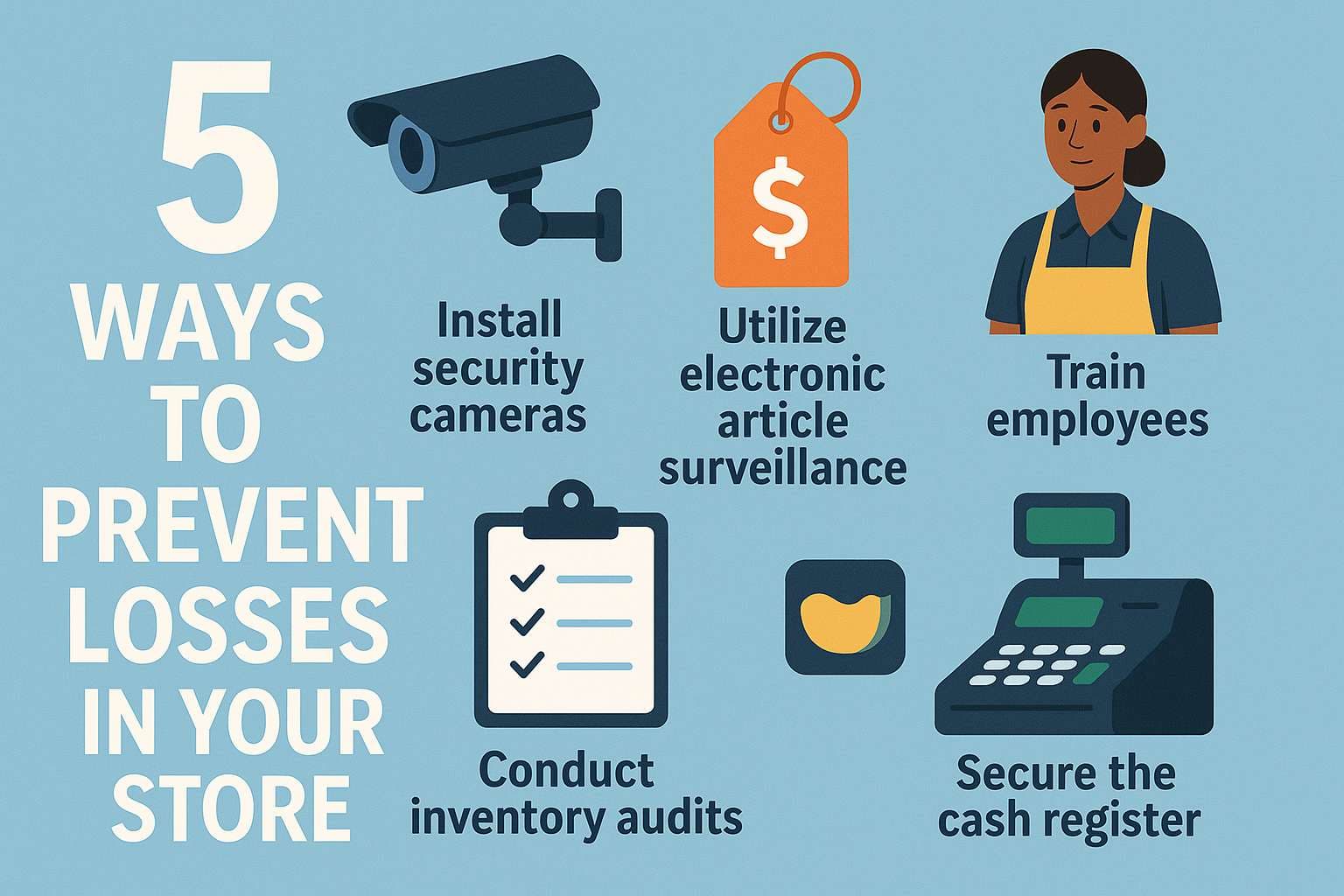
Staff theft, untracked credit, invisible shrinkage — Nigerian shop owners lose millions each year to preventable causes. Here are five battle-tested strategies to plug the leaks.
Every Nigerian business owner knows the feeling: you work hard all week, the shop is busy, but when you count the money at the end of the month, it just doesn't add up. The math never lies — money is leaving your business through holes you haven't identified yet. Here are five proven ways to seal them.
The Hidden Scale of Retail Losses in Nigeria
Before we get into solutions, let's understand the scale of the problem. Research into Nigerian retail consistently shows:
- The average shop owner loses 8–15% of revenue to preventable causes
- Staff theft accounts for roughly 40% of all retail losses
- Untracked credit sales account for another 25–30%
- Poor inventory management (shrinkage, expiry, stockouts) accounts for the rest
For a business doing ₦2 million monthly, that's between ₦160,000 and ₦300,000 per month — or up to ₦3.6 million per year — walking out the door. The good news is that most of these losses are entirely preventable.
Strategy 1: Close the Loop on Every Transaction
The most powerful thing you can do is ensure every single sale is documented in a system you control — not a notebook your staff can edit, not a spreadsheet with no audit trail, but a system where every entry is timestamped, attributed to a staff member, and permanently recorded.
When staff know that every transaction is logged and connected to their account, the temptation and opportunity for theft drops dramatically. This is why staff theft is dramatically lower in shops with digital POS systems compared to those using manual methods — not because the staff are different people, but because the system removes the opportunity.
"I didn't believe the software would make a difference until I ran a comparison. In the month before ShopGo, I was short ₦87,000 at end-of-month count. Three months after, my reconciliation gap was under ₦5,000. The money didn't go anywhere — it just stopped disappearing." — Emeka N., Electronics Store, Lagos
Strategy 2: Lock Down Staff Permissions
Not every staff member needs access to everything in your business system. A cashier should be able to process sales and print receipts — nothing more. They should not be able to:
- Edit or delete past transactions
- Apply discounts without manager approval
- View profit margins or cost prices
- Process refunds without a reason and authorization
- Access the analytics or financial reports
Implement granular permissions from day one. Every action should require an appropriate level of access. This isn't distrust — it's professional business management, and your staff will respect it as such.
Strategy 3: Track Every Naira of Credit
Credit sales are a beautiful part of Nigerian business culture — they build loyalty and serve customers in genuine need. But untracked credit is simply gifting your products away. Every credit sale must capture:
- Customer name and phone number (mandatory)
- Exact items sold, quantities, and prices
- Date of sale and agreed repayment date
- All partial payments received, with dates
Once you start tracking this properly, most businesses discover they have 20–40% more outstanding debt than they realized. Recovering even half of that can significantly improve your cash flow.
Strategy 4: Make Inventory Counts a Ritual
Digital inventory tracking is powerful, but it's not foolproof. Products get damaged, miscounted when restocked, or removed without being logged. The solution is regular physical counts reconciled against your digital records:
- Daily: Quick count of your top 10 fastest-moving products
- Weekly: Full count of one product category, rotating through all categories
- Monthly: Full store count, compared against the system's opening count for that month
Any discrepancy is a red flag that triggers an investigation. Over time, this culture of accountability makes staff far less likely to attempt theft.
Strategy 5: Know Your Numbers — At Least Weekly
You can't protect what you don't measure. Make it a weekly habit to review:
- Total sales vs. expected (based on inventory movement)
- Gross profit margin — is it where it should be?
- Credit outstanding — who owes you, and for how long?
- Staff-by-staff sales performance — any unusual patterns?
- Top 10 products — any unexplained stock movement?
Business owners who review these numbers weekly catch problems within days. Those who review monthly catch them weeks too late. Those who never review them never catch them at all.
Start protecting your profit today. Try ShopGo free — built specifically for Nigerian businesses →