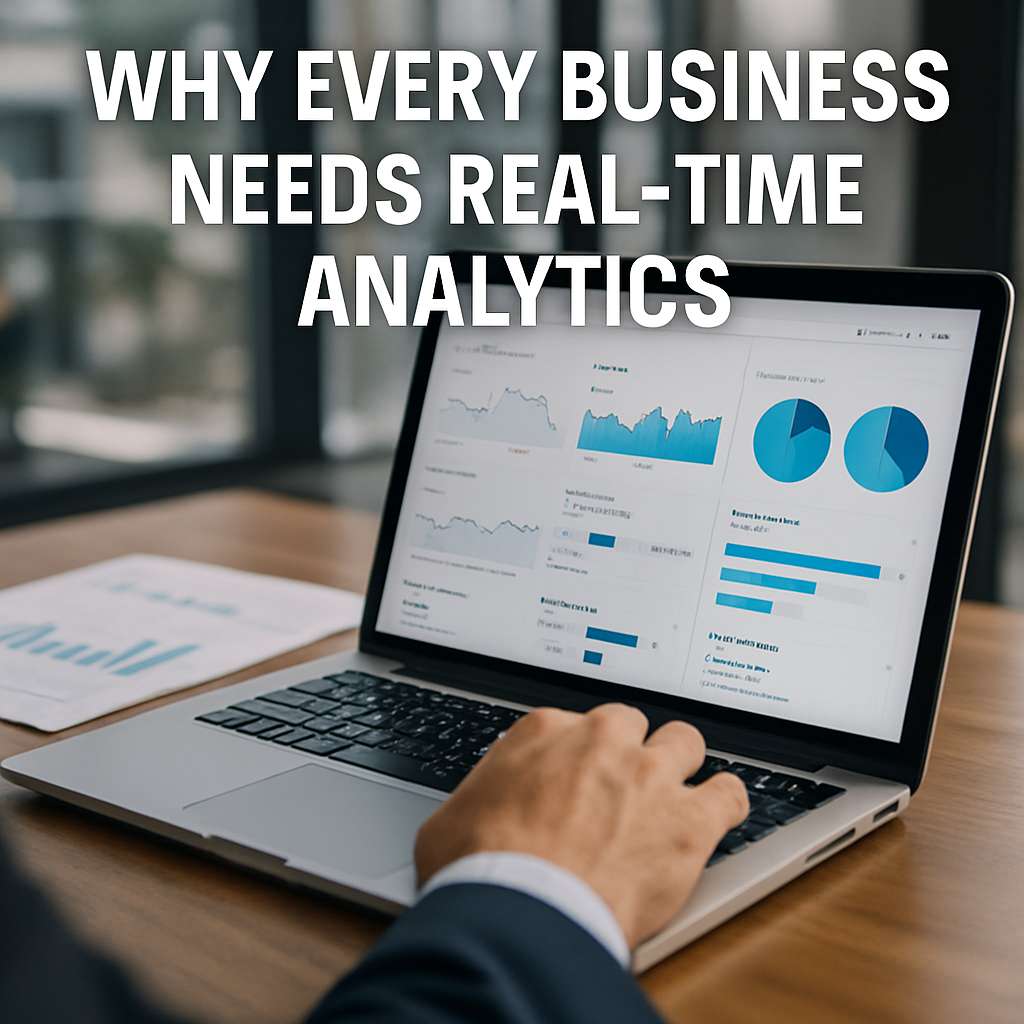
Stop making gut-feel decisions with your money. Real-time analytics show you exactly what's working in your business — and what's quietly killing your profit.
If someone walked into your shop right now and asked, "What's your profit margin on your best-selling product?" — could you answer within 30 seconds? If not, you're making ₦-million decisions with ₦-thousand information. Real-time analytics changes that completely.
The Problem With "I'll Calculate at Month-End"
Most Nigerian shop owners do their financial review at the end of the month — or whenever things feel slow. By that point, you've already made 30 days of decisions without the information you needed. A product that was quietly losing money got restocked four times. A star product ran out and you didn't notice for three days. A staff member's sales numbers flagged a problem you could have caught in week one.
Real-time analytics doesn't mean staring at a screen all day. It means having accurate, up-to-the-minute information available when you need it. The difference is transformational.
The 5 Analytics Every Nigerian Shop Owner Should Monitor
1. Daily Sales vs. Target
Set a daily sales target based on your monthly goal divided by 26 (working days). Watch this number every evening. If you're consistently below target, you know early enough to run a promotion, push a specific product, or investigate what's changed. If you only check monthly, it's too late to course-correct.
2. Gross Profit Margin Per Product
Not all revenue is equal. Some products have a 5% margin; some have 40%. Knowing which is which lets you push the high-margin items, run better promotions, and stop holding shelf space for products that barely cover their own cost. Most shop owners are shocked when they first see this data — their assumed best-sellers are often not their most profitable products.
3. Stock Turnover Rate
How quickly are your products selling? Turnover rate tells you how many days it takes for your entire inventory to sell. A high turnover means your cash is working hard. A slow turnover means capital is sitting on shelves. Products with very slow turnover should be discounted to free up cash for faster-moving items.
4. Customer Debt Aging
For businesses with credit sales, this is critical. How much total credit is outstanding? Of that, how much is 0–30 days old, 31–60 days, 61–90 days, and 90+ days? Debt that ages past 60 days becomes increasingly difficult to collect. Monitoring this weekly means you follow up while the relationship is still warm.
5. Staff Performance by Sales Value
Which of your staff members drives the most sales? Are there patterns that suggest a staff member is routing sales off-system (high traffic periods with lower-than-expected sales)? Regular review of per-staff sales data is one of the best theft detection tools available.
"The analytics dashboard showed me that 60% of my profit came from just 8 of my 200 products. I restructured my entire shop layout and marketing around those 8 products. Revenue grew 45% in two months without adding a single new product." — Hakeem O., Pharmacy Owner, Ibadan
How to Start Using Analytics Without Feeling Overwhelmed
The biggest barrier is not technology — it's habit. Here's a sustainable approach:
- Daily (2 minutes): Check today's sales vs. yesterday and vs. target
- Weekly (15 minutes): Review top 10 products by profit margin, check staff performance, review credit aging
- Monthly (1 hour): Full business review — profit/loss, inventory health, customer trends, year-on-year comparison
Within 90 days of this habit, you'll feel genuinely in control of your business for the first time. The decisions you make will be faster, more confident, and provably better.
ShopGo's analytics dashboard puts all of this at your fingertips — on your phone, in real time. Start free today →